
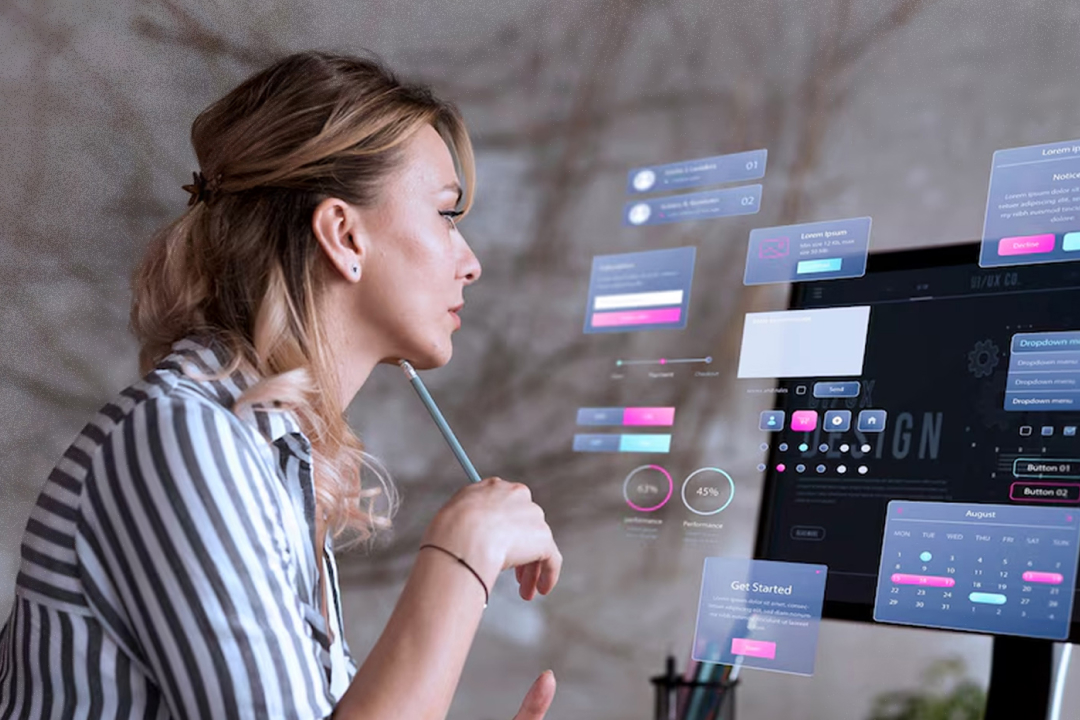
Why pixel-level intelligence is outperforming traditional methods in uncovering real productivity drivers
For years, process discovery relied on interviews, system logs, and manual observations. While these methods offer a structured view, they often miss subtle, high-frequency behaviors that define actual work. Today, combining Computer Vision and granular data capture is reshaping how organizations understand productivity, moving from assumptions to precise real-time insights.
Let’s explore how this new approach sharpens process discovery, surpassing traditional methods across five key areas.
1. From Self-Reported to Reality-Captured Workflows
Traditional process discovery depends on employee self-reporting, but human memory is selective and biased. Computer Vision closes this gap by visually recording workflows—such as screen activity, physical movement, or operational sequences—capturing what actually happens rather than what is reported. Granularity enhances this further. Instead of broad steps like “prepare report,” organizations can now see the time spent switching tabs, idle gaps between actions, and micro-delays in approvals. This level of detail exposes inefficiencies that would otherwise stay hidden.
2. Micro-Process Visibility Drives Macro Gains
Legacy methods focus on end-to-end processes but often miss micro-interactions. Productivity losses rarely come from big steps; they build up in small inefficiencies.
With granular computer vision, every click, pause, and transition is tracked. Bottlenecks are identified at the sub-task level, and repetitive friction points become measurable. For example, a 3-second delay repeated 500 times a day becomes a major productivity drain—a detail that traditional discovery would miss entirely.
3. Real-Time Insights Replace Static Snapshots
Traditional process discovery is often conducted only quarterly or annually, which means that by the time insights are generated, the workflows and business processes have already changed. This lag renders many findings obsolete and limits the ability of organizations to respond quickly to evolving challenges.
Computer Vision introduces continuous, real-time discovery. Live monitoring of workflows, immediate detection of deviations, and faster intervention and optimization are all possible. Granularity ensures that insights are not just real-time but also deeply contextual, enabling leaders to act with precision rather than approximation.
4. Objective Data Minimizes Human Bias
Interviews and workshops are subjective employees may unintentionally omit steps, overstate efficiency, or align responses with expectations.
Computer Vision provides unbiased visual evidence, consistent data across teams, and standardized measurement of productivity. When combined with granular tracking, organizations gain a single source of truth—removing ambiguity from decision-making.
5. Unlocking Hidden Automation Opportunities
Traditional methods spot high-level automation opportunities. Many wins hide in micro-tasks.
Granular computer vision reveals repetitive cursor movements, redundant navigation patterns, and manual data transfers between systems. These insights enable hyper-targeted automation (such as RPA and AI workflows), faster ROI on digital transformation initiatives, and reduced employee fatigue from repetitive work.
6. The Bigger Shift: From Process Mapping to Process Intelligence
This is more than an improvement—it’s a paradigm shift.
Traditional process discovery seeks to answer: “What is the process supposed to be?” In contrast, Computer Vision combined with granularity answers: “What is actually happening, moment by moment—and how can we optimize it instantly?” This transition transforms process discovery from a retrospective exercise into a living, breathing intelligence system.
Final Thought
Organizations embracing this shift gain clarity at scale. Seeing detailed work reveals new opportunities.
Don’t just observe processes—see every detail as it unfolds. Take the lead: implement computer vision and granular data to outpace the competition with clarity and real-time insight.
